Line of action
Find the directional sentence running through the body before adding details, props, or performance texture.
Character animation field journal
Posecraft Workshop is a practical course journal for people who want to read a character’s intention, give a body believable weight, and understand the working parts beneath a flexible rig.
Built as a notebook: observe, test, revise, repeat.

Build a readable action first, then use timing, spacing, and simple rig choices to make the idea feel inhabited.
Pose-reading syllabus
Each chapter uses the same small question: what does the audience understand before they notice any technical work?
Find the directional sentence running through the body before adding details, props, or performance texture.
Track where force enters, settles, and leaves the figure so stillness feels held rather than frozen.
Learn which controls protect an arc, which controls create a pivot, and which choices cloud an action.
Use a review pass that separates silhouette, intention, rhythm, and mechanical follow-through.
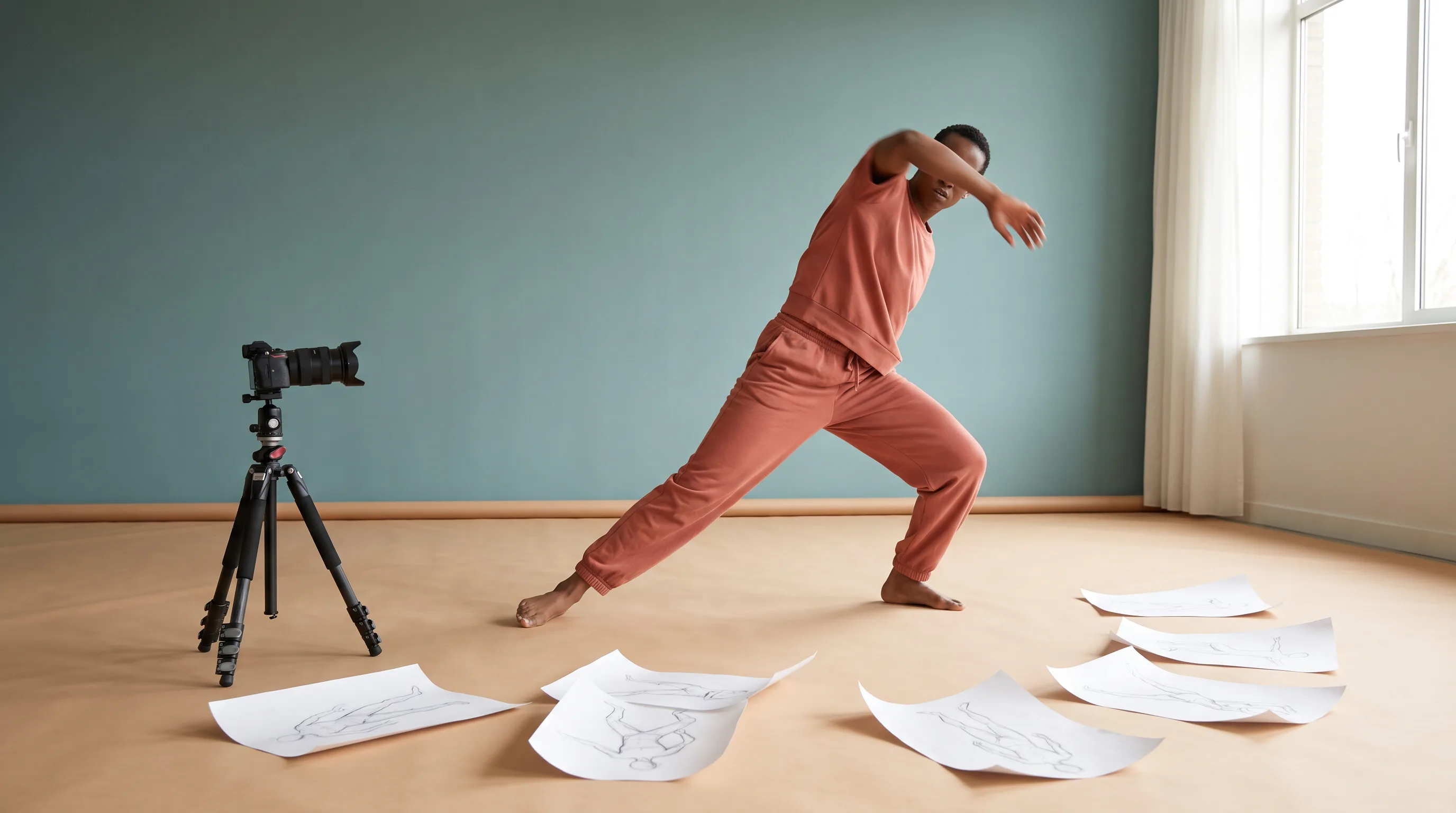
Gesture-to-weight sequence
Hands-on rig anatomy
This table keeps the focus on physical intention rather than software vocabulary. The same principles travel between drawn, stop-motion, and digital characters.
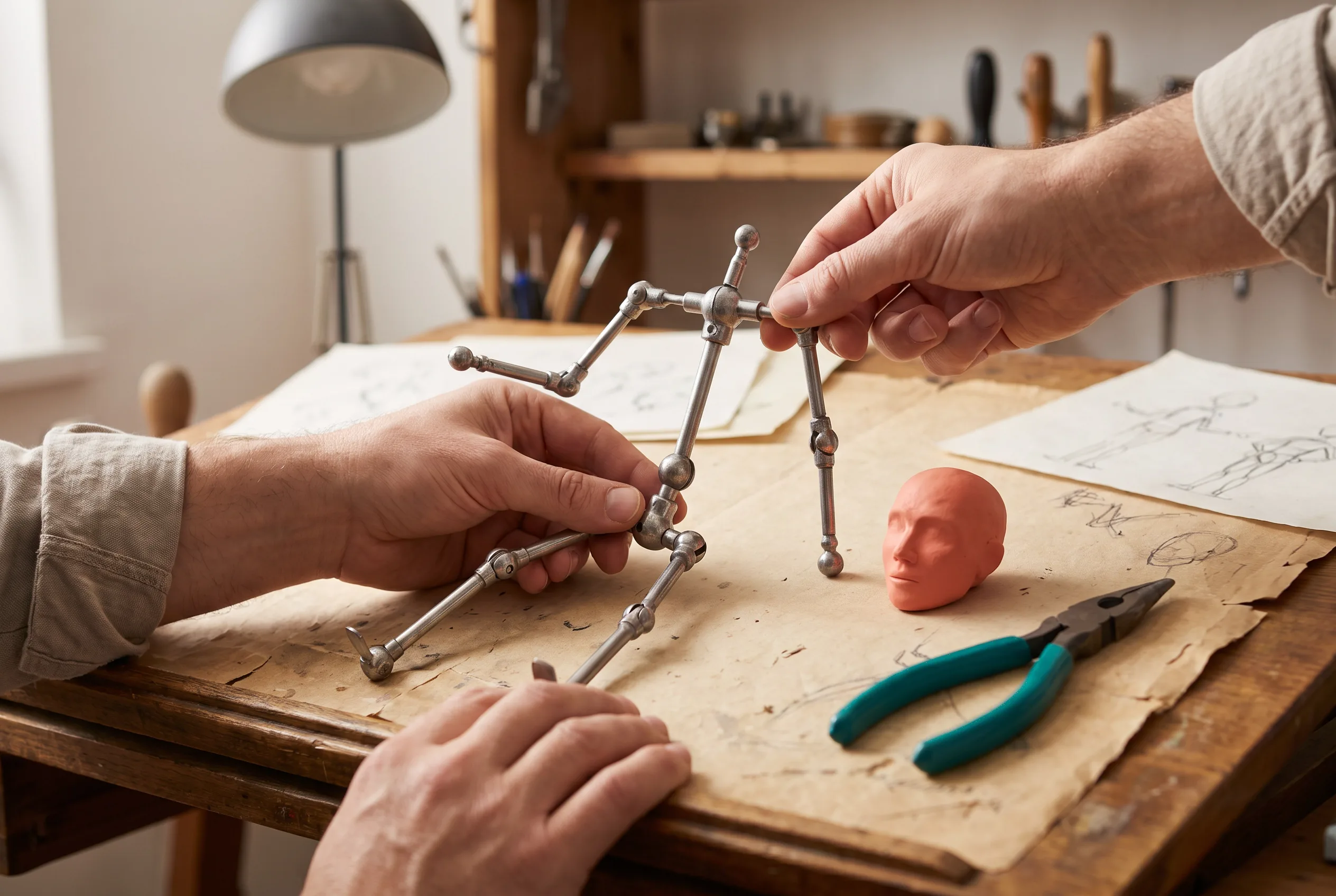
| Part | Ask first | Practical check |
|---|---|---|
| Root / hips | Where is the body’s center being carried? | Move the root alone and look for a readable shift in weight. |
| Spine chain | Is the torso shaping a single idea or several competing curves? | Use one broad bend before adding smaller counter-curves. |
| IK contact | Which point is fixed to the ground, wall, prop, or partner? | Scrub through the contact and watch for slipping. |
| Hands / face | What detail arrives after the big decision? | Let fingers and features support the thought rather than replace it. |
Studio exercise cards
Select an exercise card. Each one is designed to leave you with a small, observable question for the next pass.
Draw three versions of the same action at a postage-stamp scale. Change only the line of action and the space between limbs. If the character’s attitude disappears when the page is held away, return to the broadest choice.
Film or observe a single step that ends in a quiet stop. Map the planted foot, hip shift, and delayed shoulder. Then make a simple character repeat that path without adding extra business.
Choose one primary control, such as the root or chest, and pose the entire idea with it before touching detail. This exposes whether the shot has an understandable center of action.
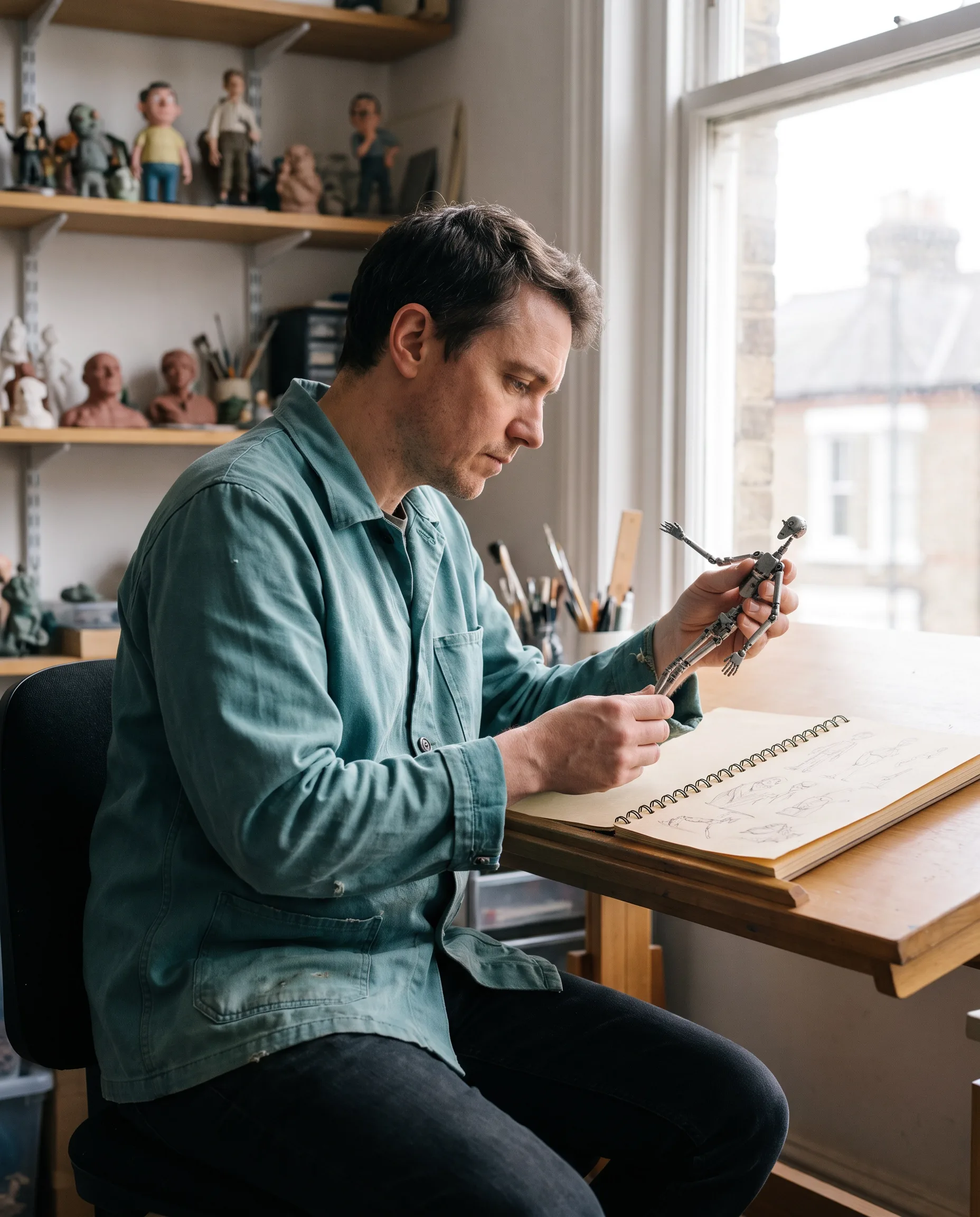
Mentor notebook
Use feedback to locate a visible question, not to pile on stylistic instructions. Before changing a curve or a keyframe, ask what the audience may be missing: the decision, the effort, the contact, or the timing between them.
Try writing notes as observations: “the planted foot reads late,” “the hand arrives before the thought,” or “the chest changes direction twice.”
Practice loop planner
Set a modest loop that takes you from looking to making and back to looking. The point is a trail of decisions you can revisit.
Shot-review rail
Squint or thumbnail the shot. Can you still locate the direction, balance, and emotional temperature?
Look for the precise frames where feet, hands, props, or a surface become reliable.
Notice whether the action has a clear preparation, a committed event, and enough room to land.
End with a change you can actually make rather than a broad judgement about quality.

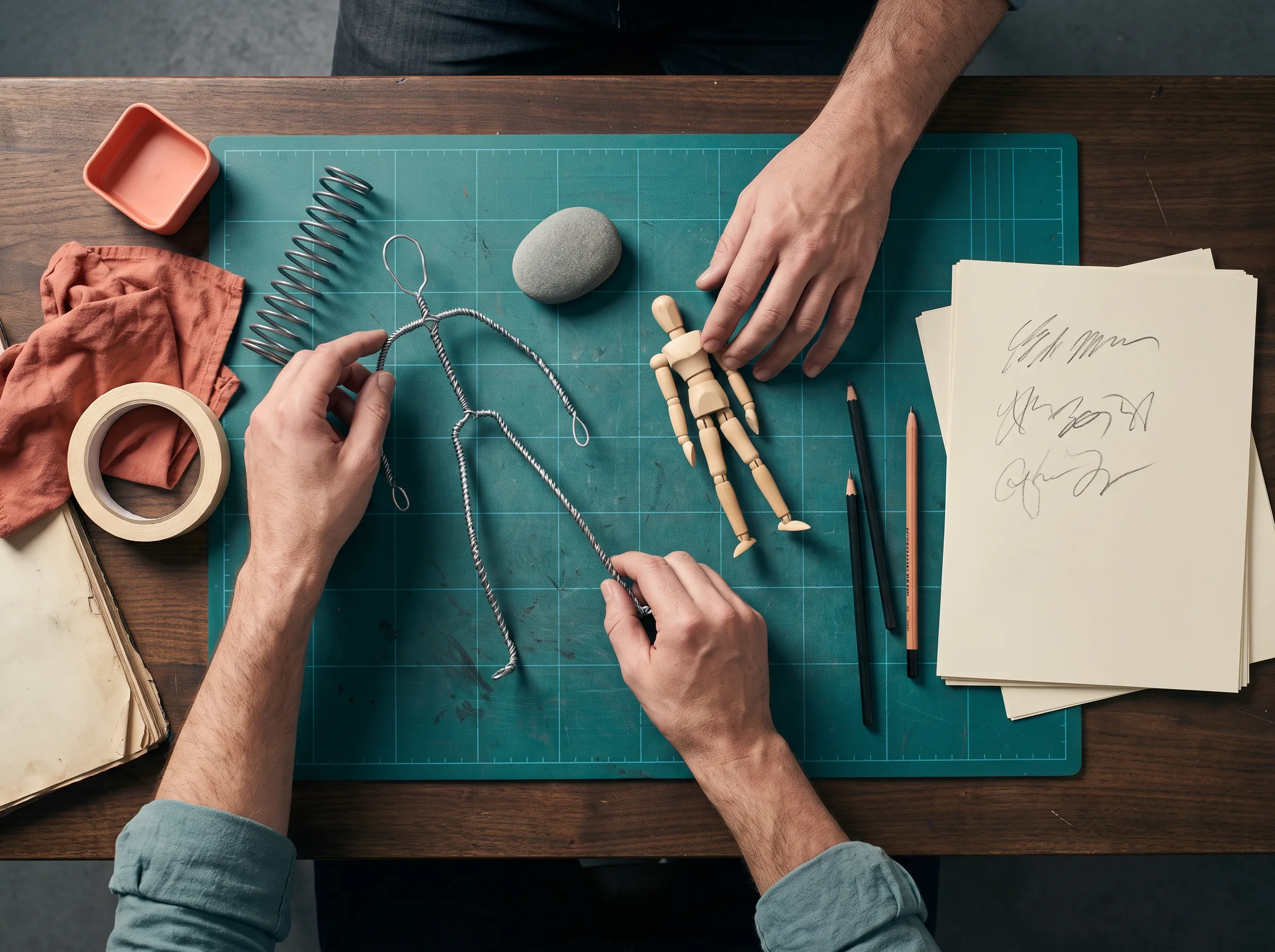
Equipment checklist
Mark what is already on your desk. This private checklist stays in this browser and is only a prompt for a hands-on session.
Field notes
These notes describe the way this learning journal is intended to be used: slowly, visibly, and with room for different tools.
Contact the journal
For a note about the material, accessibility, or a correction, write to [email protected]. The form prepares an email draft in your own mail app; it never sends automatically.